THE WATCH TRADING HOUSE · A new way to buy and sell exceptional timepieces
WSWATCHSMITH
Get a valuation

WATCH SMITH JOURNAL · ROLEX HISTORY

A century of making time matter.

From a London watch business to icons of exploration and the auction room, these are moments that shaped Rolex’s place in watchmaking.

A SHORT FILM · 18 SECONDS

The story in motion.

Seven visual chapters trace the early Oyster, the rise of the sports watch and three remarkable collector pieces. The images are editorial; the auction photographs show the actual lots.

Visual history film assembled for Watch Smith from still photographs. 1905, 1953 and 1963 scenes use illustrative images, while the 1926 Oyster and auction lots use source photography.

THE MILESTONES

Built on an idea.

The timeline highlights a few defining moments. Rolex’s own history pages provide the full account.

1905

A London beginning

At 24, Hans Wilsdorf established a company in London that distributed timepieces. He saw the potential of a precise, reliable watch worn on the wrist at a time when pocket watches still dominated.

Rolex history, 1905–1919
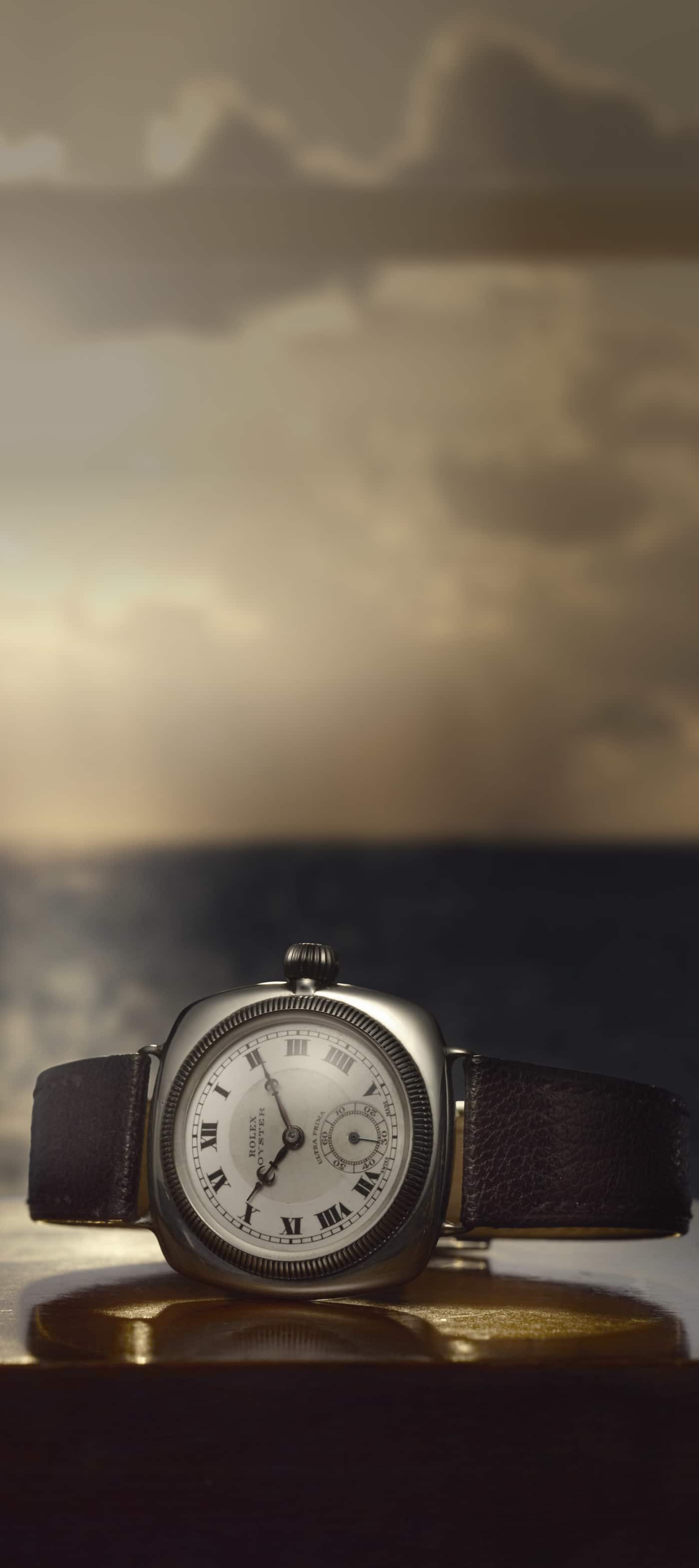
1926

The Oyster arrives

Rolex introduced the Oyster, a waterproof and dustproof wristwatch with a sealed case to protect its movement. The design became a foundation for the brand’s future tool watches.

Rolex history, 1926–1945
Early Rolex Oyster wristwatch
1931

The Perpetual rotor

Rolex patented a self-winding mechanism with a Perpetual rotor. Movement from the wearer’s wrist could wind the watch, bringing daily practicality to the Oyster case.

Rolex history, 1926–1945
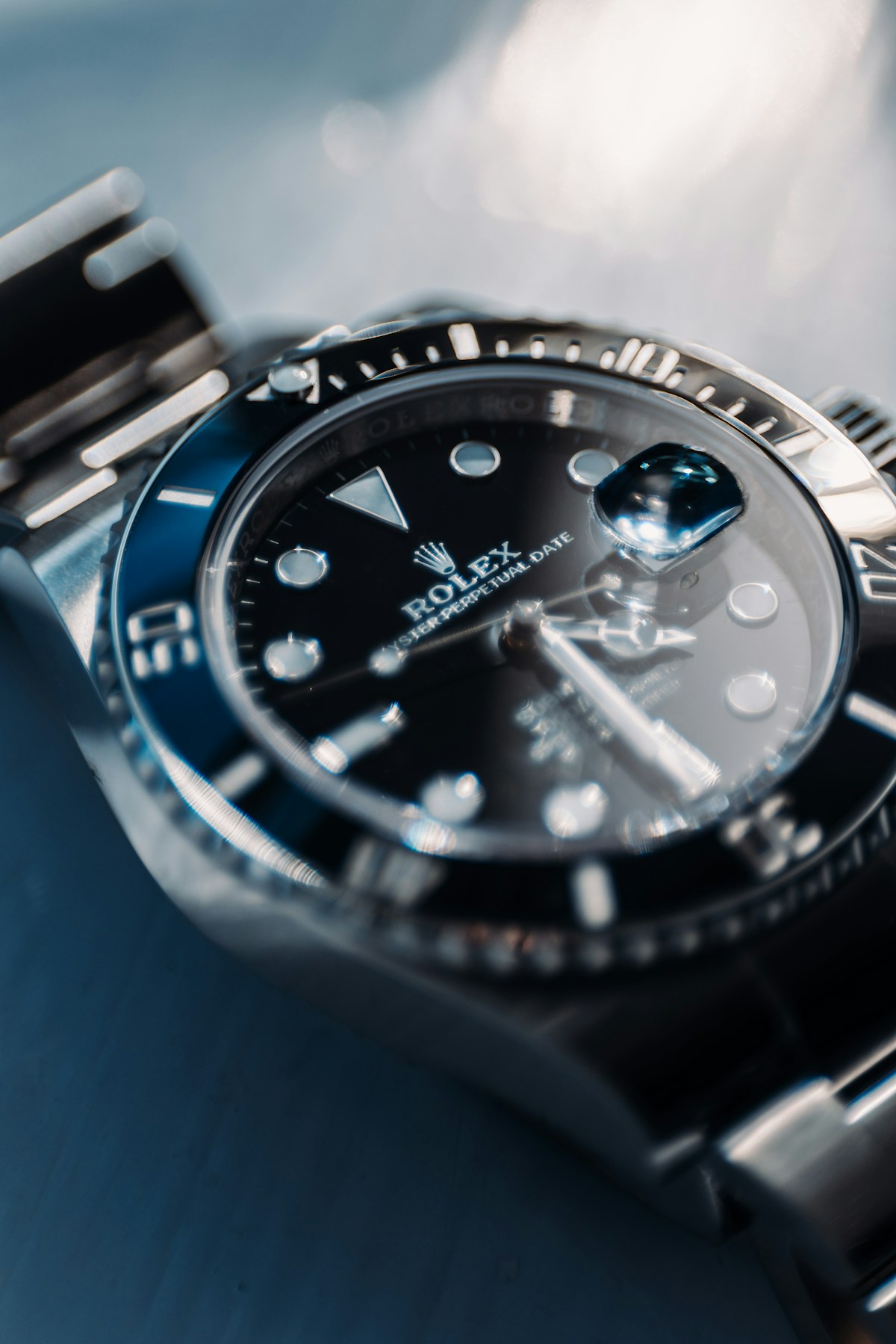
1953

Into the deep

The Submariner debuted as a divers’ watch waterproof to 100 metres, with a rotating bezel for measuring immersion time. The same period saw Rolex develop professional watches for explorers and specialists.

Rolex history, 1953–1967
Modern Rolex Submariner detail, illustrative of the collection
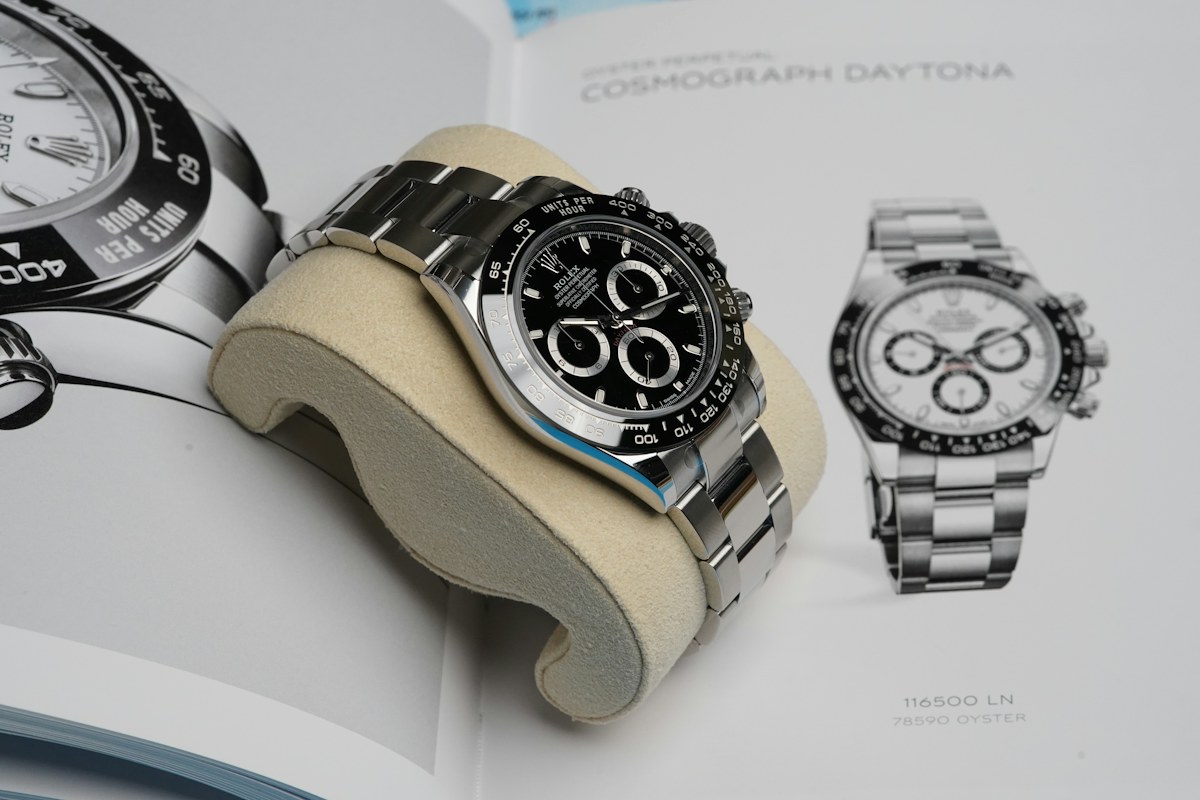
1963

The Daytona era

Rolex introduced the Cosmograph Daytona chronograph in 1963. Its connection to racing, distinctive dials and many rare variants later made it a focus of collectors worldwide.

Rolex history, 1953–1967
Modern Rolex Daytona, illustrative of the model

THE AUCTION ROOM

Watches with extraordinary stories.

Three landmark Rolex auction results. Prices below are historical sale results in their original currencies, including the auction house’s buyer’s premium where reported. These watches are not for sale here.

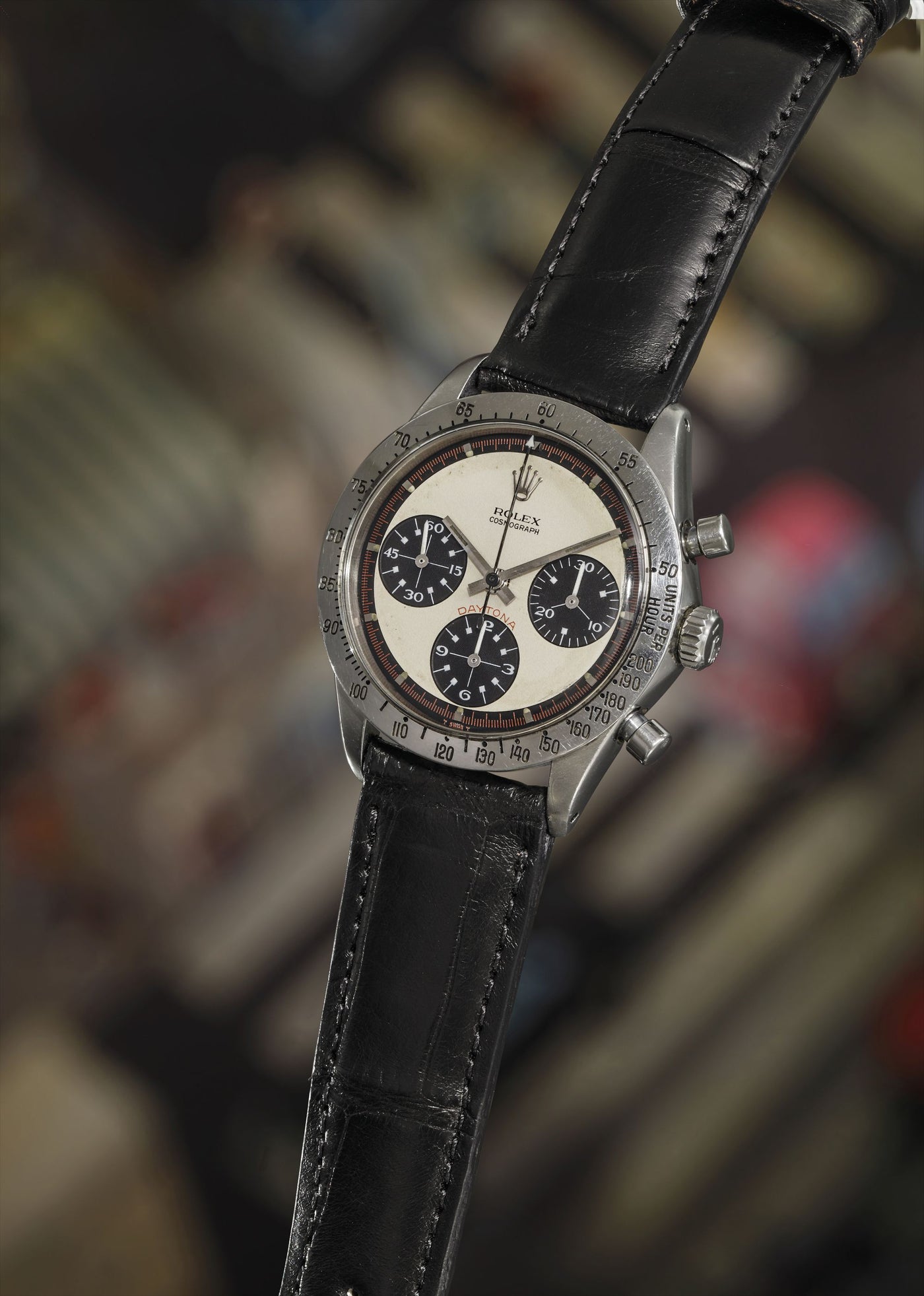
Paul Newman's Rolex Daytona reference 6239 auction lot
1968 · REF. 6239

Paul Newman’s Daytona

The personal Daytona associated with the actor and racing driver carried an engraved message from Joanne Woodward. Its ownership story helped make the 2017 sale a watch-auction landmark.

US$17,752,500 · 2017View the Phillips lot
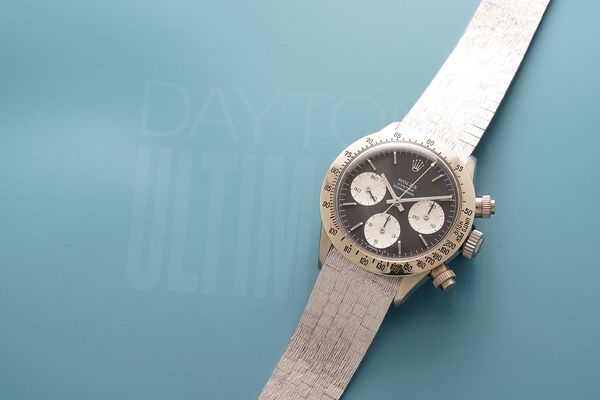
The white-gold Rolex Daytona reference 6265 known as the Unicorn
REF. 6265 · WHITE GOLD

“The Unicorn” Daytona

Phillips described this as the only-known manual-winding white-gold Rolex chronograph. Its unusual metal and documented rarity brought a standout result at the 2018 Daytona Ultimatum sale.

CHF 5,937,500 · 2018Read the Phillips result
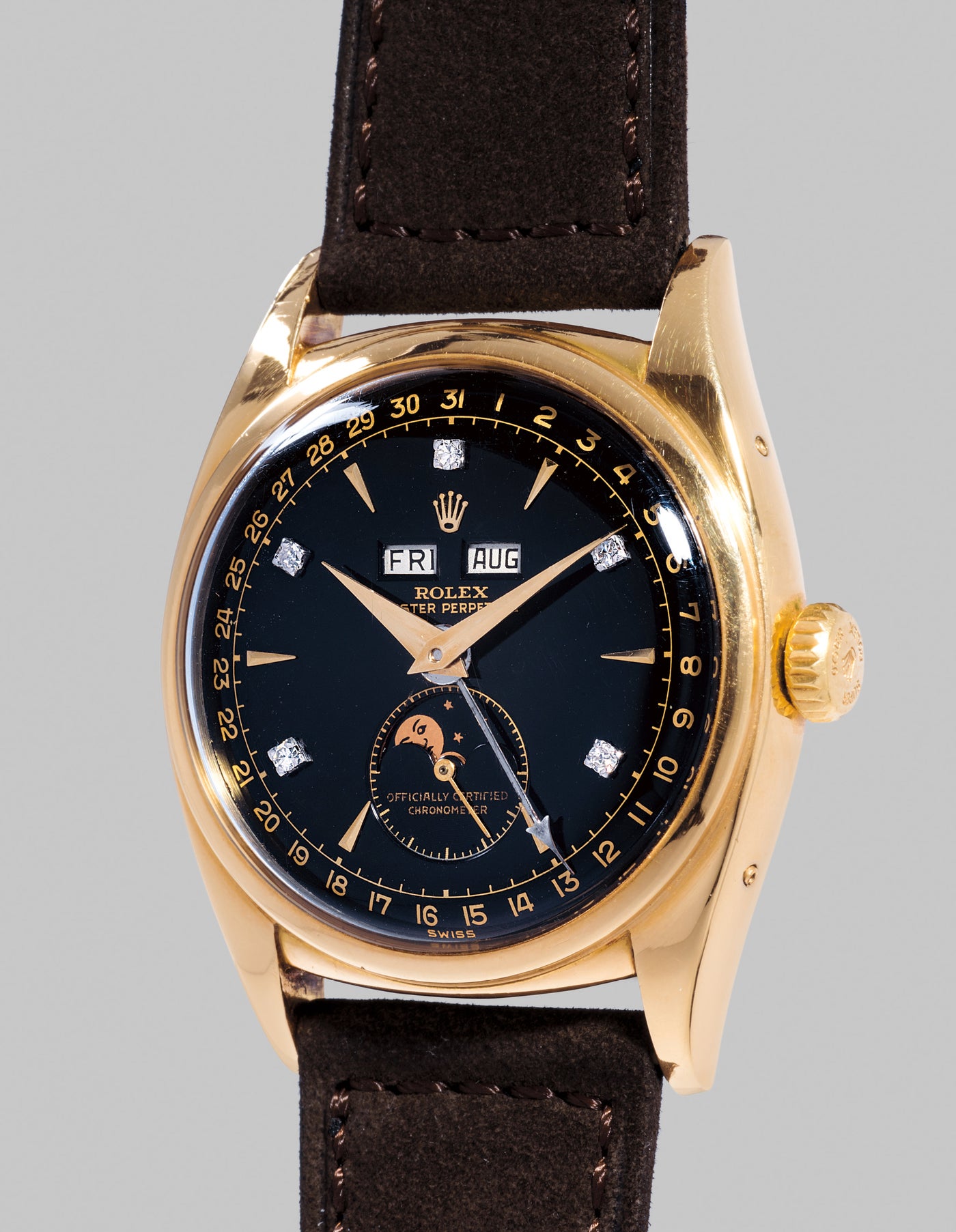
Rolex Bao Dai reference 6062 with black dial and moonphase
1952 · REF. 6062

The “Bao Dai”

Owned by Vietnam’s last emperor, this yellow-gold triple-calendar moonphase has a black dial and diamond markers. Its history and unusual configuration made it a celebrated collector piece.

CHF 5,066,000 · 2017View the Phillips lot

History: Rolex 1905–1919, 1926–1945, 1953–1967. Auction photographs and results: Phillips Newman, Unicorn, Bao Dai. Rolex and Phillips own their respective photographs.

A WATCH SMITH PERSPECTIVE

Every great watch has a history.
What's yours?

If you are preparing to sell, good records and clear photographs help tell the story behind the watch.

Prepare a valuation